Will I Lose My House in a Bankruptcy?

house-151610_640

This is a post that I wrote for the Killen Landau & Associates blog, which seeks to deal with people’s worst fears when dealing with a personal financial disaster.

The fear of losing your home is a powerful one. When their finances go south, many imagine that bankruptcy will leave them homeless. Is this fear justified? Not really, or not in the normal course of a bankruptcy.

Yes, when you go bankrupt, you give control of your assets to a trustee in exchange for getting rid of your debts. This, in theory, could mean that the house gets sold to help pay back the creditors. But in practice this rarely happens, mainly because it is not in the best interests of everyone involved. The trustee has a lot of discretion, which he or she generally uses to safeguard the rights and interests of both the creditors and the debtor. Selling the house outright usually doesn’t achieve this purpose. So what normally happens? . . . Read more.

Catalan Mountain and Sea Cuisine

El_Celler_de_Can_Roca_serving_displayEl Món, a selection of five appetizers, served at the “world’s best restaurant,
El Celler de Can Roca.

Whether you love seafood or meat, or both, Catalonia is a destination for the world’s gourmands. Its culinary traditions are a mixture of influences – for example, paella from Valencia, or meat dishes from Provence – but always interpreted with a Catalan spin and served with the Mediterranean mania for the freshest  foods.

The dishes combine the best ingredients found in sea and mountains, as well as sweet and savoury flavours, for a style of cuisine called mar i muntanya. Typical ingredients include almonds, tomatoes, aubergines, peppers, rice, olives, olive oil, calamari, many other kinds of seafood and pork done in a variety of ways, since Catalonia is one of the main producers of swine products in Spain. Xoriço paprika salami, produced from the black Iberian Cerdo pig, is often used in cooking.

Continue reading →

Chito-Ryu: The Next Generation

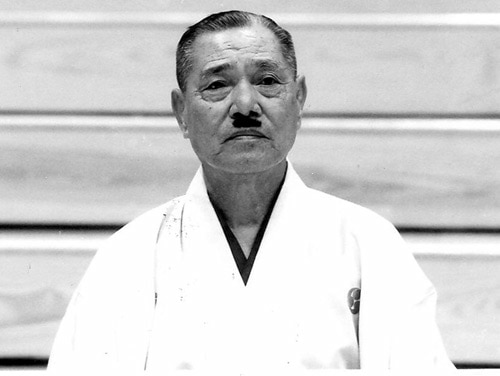
Master Tsuyoshi Chitose

Senior practitioners of Chito-ryu karate live under long shadows. First there is enormous shadow cast by founder Tsuyoshi Chitose, a martial arts virtuoso who studied under many masters and synthesized what he learned into his remarkable art.

Then there are the shadows cast by the pioneers who introduced Chito-ryu to their countries and amassed impressive organizations. In North America these larger-than-life figures include Masami Tsuruoka, the Father of Canadian Karate; Shane Y. Higashi, head of the Canadian Chito-ryu Karate Association;  and the late William Dometrich, founder of the United States Chito-ryu Karate Federation. . . . Read the post from my karate club blog.

Take the Heli-Skiing Cure

1280px-Cromwell_Heli-1

The following blog post, originally appearing on Lifecruiser.

I thought it would be a good way to cure my fear of heights.

A friend and I were skiing in Rockies of Alberta, challenging the slopes of Lake Louise and Sunshine. One night, after a couple of  shots in front of the roaring fire at our lodge in the town of Canmore, Hal said, “I think we should try heli-skiing.” . . .

Continue reading →

Villa Mas Mateu: Tilt at Windmills in True Style

EntradaPpal_01_ferruz

So you want a vacation in Spain, in Catalonia. You want to be near the action of Costa Brava and to a town full of history and fine dining, like Girona. But you also want a secluded inland location, on its own forested estate, nestled amid olive groves, with views of the snowcapped Pyrenees. You want to immerse yourself in the ambience of a centuries-old private home but have all the amenities and comforts of a dazzling modern design.

A tall order? No, what you want is Villa Mas Mateu. . . . Read the full blog post for the LaCure magazine here.

Let’s Talk Verbal Identities

Photo by Giedrius.

Photo by Giedrius.

So verbal identities are a thing. . . . When did verbal identities become a thing?

I recently met Scott Christie, the creative director at Interbrand in Toronto. Scott mentioned in passing that the practice of creating ‘verbal identities’ was a big thing, with a lot of writers devoted to it, at the New York Interbrand office. And now they were trying to introduce the discipline to Canada.

I nodded sagely then rushed home and googled ‘verbal identity interbrand’ and got this  explanation:

Continue reading →

Bankruptcy: The Road to Recovery

shutterstock_164995307

It was a perfect storm of personal and professional misfortunes.

Bryan was a successful independent marketing communications consultant, well respected in the business with a good network of friends. But in his late 50s he discovered that he had adult attention deficit disorder (ADD), with a host of problems, ranging from an inability to focus to poor organization skills and depression. After years of laboured compensation for the symptoms, he felt the copying structure he had carefully built begin to fall apart.

Continue reading →

Discover the Art of Easy Living

image-348

I wrote the following post while serving as community manager of Applied Artworks, a site selling limited-edition art prints, as well as the assignment services of photographers and illustrators:

If summertime is about easy living, then the art of enjoying it should be simple, beautiful and affordable.

Applied Arts has launched its ArtWorks site to provide a gorgeous variety of art at summer sale prices. Whether you have a cottage, a home or an office that you want to decorate with prints of original images, you should visit the three ArtWorks Galleries:

Continue reading →

Surviving the End of the World

fear\

The fear is eating away your stomach lining. You can’t sleep. You can’t concentrate. You feel like a failure in the eyes of the world.

The envelopes of the unopened bills have changed to new ominous colours. The days you could juggle minimum payments between credit cards is coming to an end as you reach your limits.

You stop answering the phone calls for fear of bill collectors . . . and then the phone stops working altogether.

Many people come to Toronto bankruptcy trustees gripped by the worst fear of their lives. They are looking at the end of their world, and who could be complacent in the face of that?

Continue reading →

Tail Wags Content Dog

13231998241851913211Cartoon Dog Wagging Tail.svg.med

OK, the case for companies to produce constant streams of online content is something like this:

More and more businesses and organizations depend on the Internet to connect with customers and audiences. This means that getting high page rankings in search engines, particularly Google, is a priority.

Universally organizations turn to search engine optimization (SEO) experts to tinker under the hood and do what they can to improve rankings. As Google changes its algorithms, gets wise to the latest SEO tricks and penalizes those it deems to have used inappropriate methods to get high search rankings, content has become increasingly important.

A steady stream of content is what the SEO experts recommend to get noticed and improve placement. It can’t be any old content, acting as a placeholder for keywords, but it has to be “rich”—i.e., stuff that people actually want to read and repost and link to.

Every blog post, for example, is treated by search engines as a separate web page, and if keyword-optimized can help a site get more weight and reach in its ranking assessment.

The regular blog posts can also be used to drive content to the other increasingly important part of organizations’ online presences: their social media.

So companies are open to having good writing on an ongoing bases to fulfill the requirements set out by their SEO experts. The tail may be wagging the dog, but  the dog is happy and that’s a good thing for content developers who want to scratch his head . . . Sorry, I’m getting lost in this metaphor. Time for bed.